
Start with the contamination
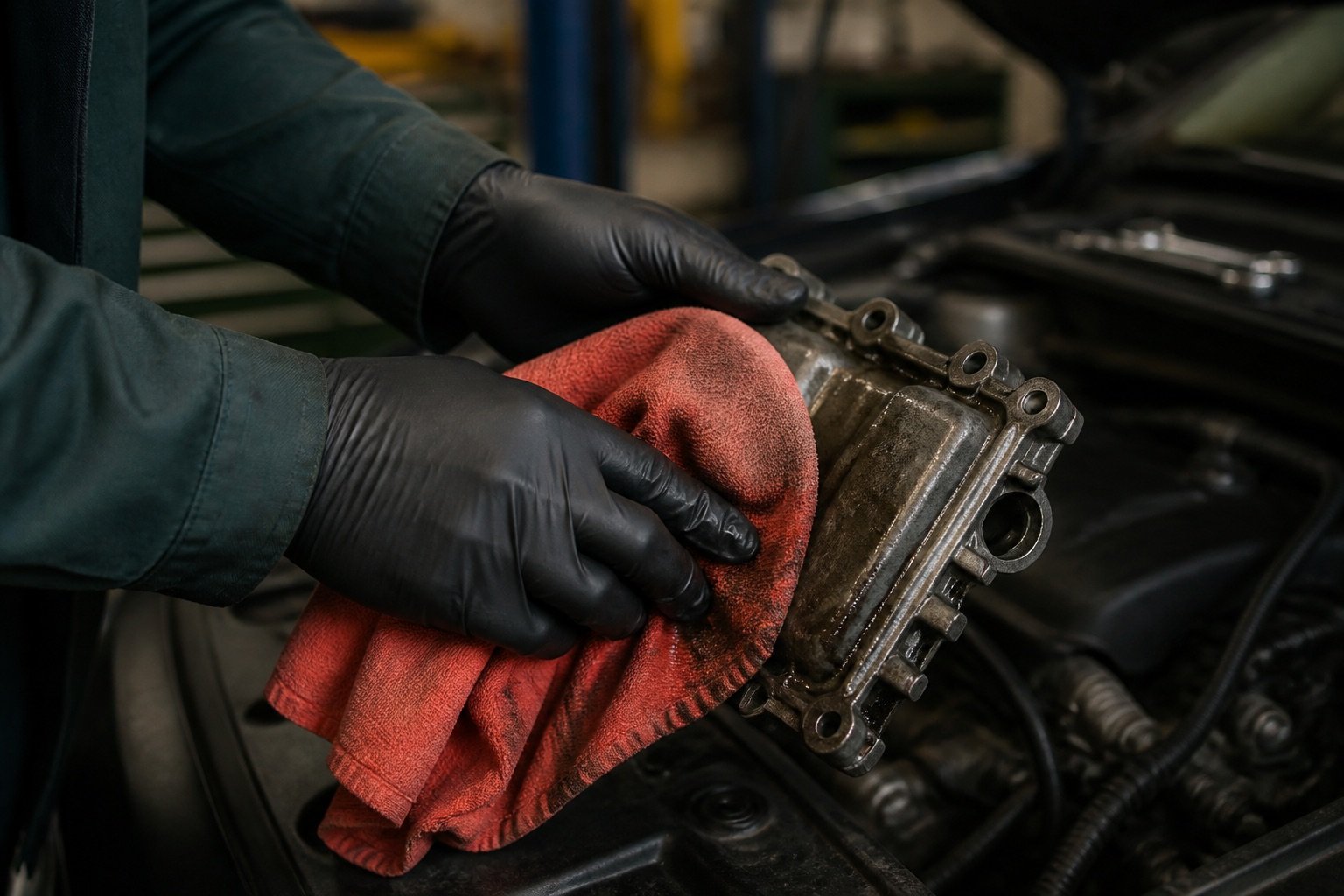
Oil, grease and metal parts require a material that tolerates friction. Coloured cotton and heavy-duty grades are practical choices. White material works better when the operator needs to see contamination clearly.
- Oil and grease: coloured cotton or heavy-duty
- Finishing and inspection: white cotton
- Large spills: highly absorbent terry
Separate rags by work area
Use different containers for mechanical work, finishing and liquids. A clear label prevents an oil-loaded rag from reaching a sensitive surface.
- One material for each task
- Separate container for used rags
- Weekly consumption check
Test before a recurring order
Start with a small quantity and measure kilograms used during a normal week. Compare usage with completed jobs, then define a minimum stock in bales.
- Five-to-seven-day trial
- Usage per completed job
- Safety stock for busy periods
Frequently asked questions
Which rag is suitable for engine oil?
Coloured cotton or heavy-duty rags are suitable for oil, grease and repeated friction.
How many rag types does a workshop need?
Two or three are usually enough: heavy dirt, white inspection and a highly absorbent grade for liquids.