
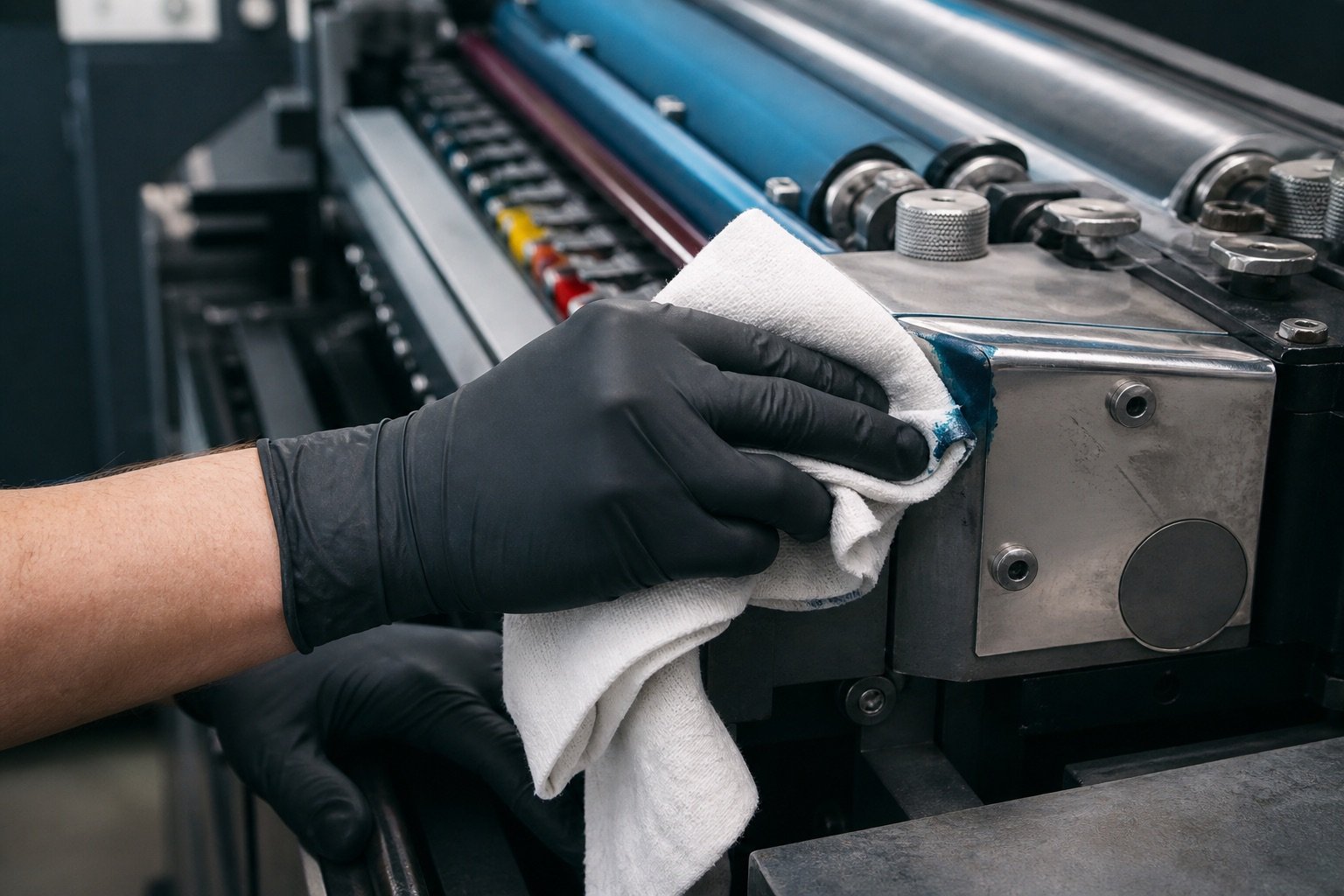
Use white material for inspection
White cotton makes ink and contamination easy to see. It helps during colour changes and wherever the operator needs visual confirmation that a surface is clean.
- Ink remains visible
- Inspection after cleaning
- Simpler colour separation
Test the lint level
For rollers and sensitive areas, test material on a real component. Fine knit, flannel or premium low-lint grades may work better than a thick fabric.
- Test on the component
- Inspect under good light
- Compare remaining residue
Standardise containers
Keep separate containers for ink, maintenance and finishing. Do not mix clean and used rags, and define a simple rule for disposal or reuse.
- Container for each stage
- Visible labels
- Rule for used material
Frequently asked questions
Which rag is recommended for ink?
White cotton helps inspection; sensitive areas should use a tested low-lint grade.
Can one material be used for every colour?
The grade may be the same, but used rags and containers should be separated to limit ink transfer.