
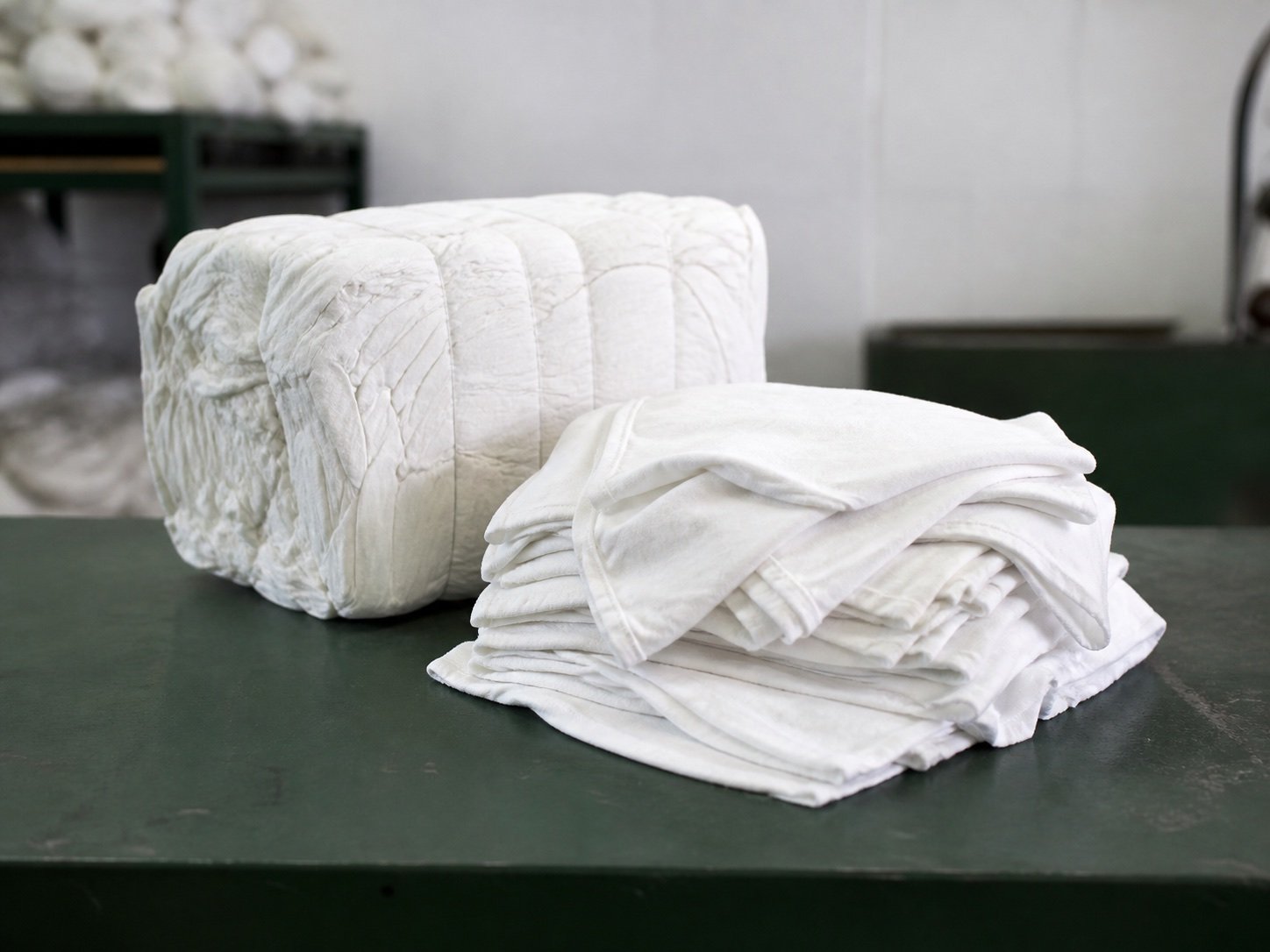
When textiles are more practical
For parts, edges, oil and repeated friction, a textile rag provides grip and durability. Larger pieces can handle tasks where paper would tear or be consumed quickly.
- Repeated friction
- Parts and edges
- Heavy contamination
When paper may be sufficient
Paper rolls can be convenient for light liquids, precise dispensing and quick wiping. Check wet strength and any residue left on the surface.
- Quick wiping
- Controlled quantity
- Clean and predictable stations
Compare on the same task
Test both options on a real operation. Measure sheets or pieces, time and final result. In many workshops the best answer is a clearly defined combination.
- Same surface
- Same contamination
- Total cost per task
Frequently asked questions
Do textile rags replace paper completely?
Not in every operation. Many companies use each solution where it performs most efficiently.
How can the more economical option be identified?
Compare total material used for the same task and include operator time.